
 SpectraDx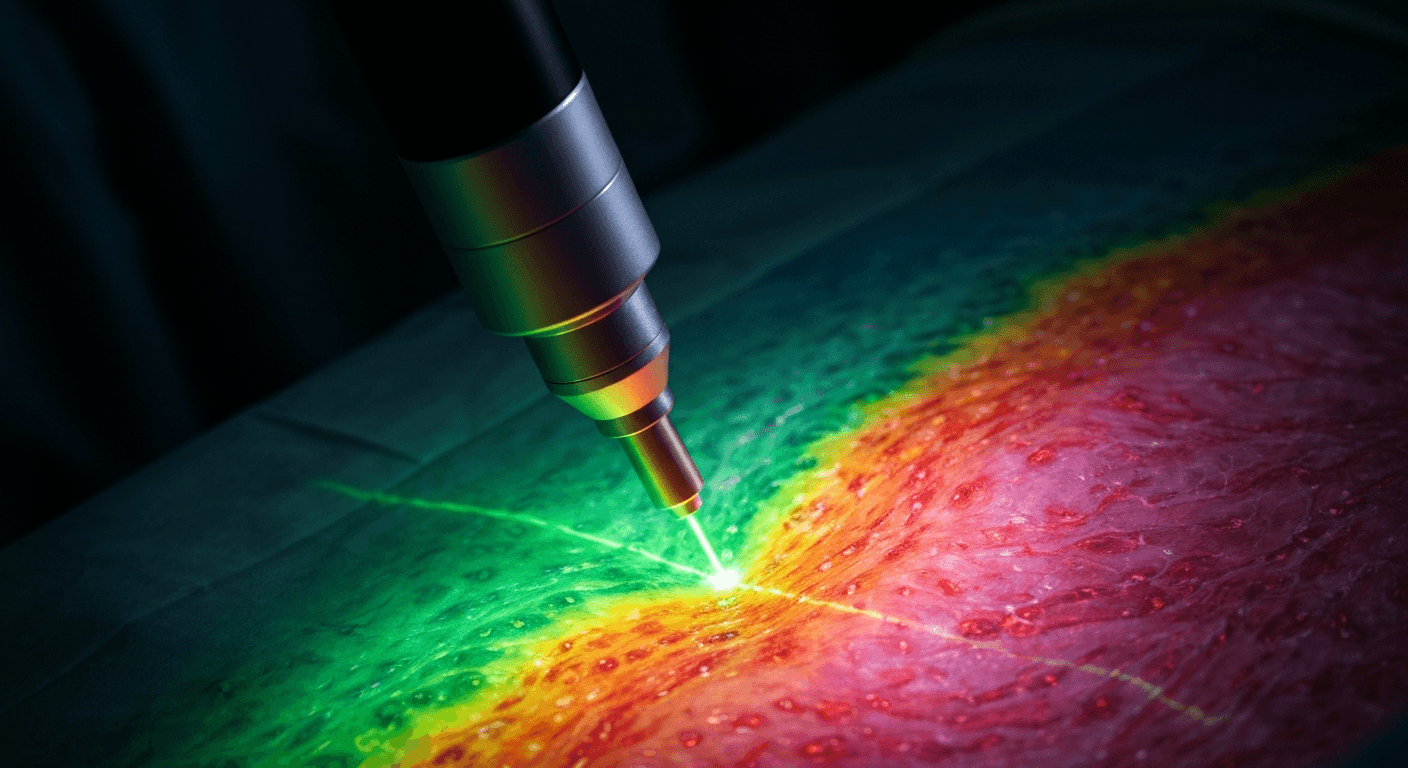
A surgeon removes a tumor. The question that determines whether the patient needs a second operation is simple: did you get it all?
Answering that question during the operation - while the patient is still on the table - is one of the hardest problems in surgical oncology. The surgeon cannot tell tumor from healthy tissue by visual inspection alone. The colors, textures, and mechanical properties of tumor and normal tissue overlap, especially at the margins where tumor cells infiltrate surrounding tissue. The current standard of care is the frozen section: a sample is cut from the surgical margin, rushed to a pathology lab, frozen, sliced on a cryostat, stained with H&E, and examined by a pathologist. The result comes back in 20-44 minutes.
Twenty to forty-four minutes with the patient under general anesthesia, the surgical cavity open, and the entire OR team waiting. At $36-62 per minute of OR time, each frozen section costs $720-2,700 in operating room overhead alone - before pathology lab costs, before the pathologist's time, before the tissue processing consumables.
Stimulated Raman histology (SRH) does the same thing in under 3 minutes. No freezing, no staining, no pathology lab, no waiting. A fresh tissue sample is placed on the SRH microscope in the OR, and the system produces an image that looks like an H&E-stained histology slide. An AI classifier returns a diagnosis in seconds. The surgeon has an answer before the next phase of the operation begins.
This is not theoretical. The NIO Laser Imaging System by Invenio Imaging has been used in over 12,500 clinical procedures. Multi-center clinical trials are underway across brain, prostate, lung, and breast cancer. The first FDA Breakthrough Device Designation for an SRH AI module was granted in October 2024. Raman spectroscopy is crossing from the research lab into the operating room.
The Surgical Margin Problem
Positive surgical margins - tumor cells present at the edge of the resected specimen - are a persistent problem across cancer surgery:
Brain tumors (glioma). Complete resection of glioblastoma is associated with significantly improved survival, but the infiltrating edge of a glioma blends imperceptibly into normal brain. Neurosurgeons rely on MRI neuronavigation, which loses accuracy during surgery due to brain shift. Frozen sections are the gold standard but are limited to point sampling - you can only freeze and examine a few sites per operation.
Prostate cancer. Positive surgical margins after radical prostatectomy occur in 11-38% of cases, depending on tumor stage and surgical approach. Positive margins are associated with higher rates of biochemical recurrence and the potential need for salvage radiation therapy.
Breast cancer. Positive margins after breast-conserving surgery (lumpectomy) occur in approximately 17% of cases, driving re-excision operations. Each re-excision adds another surgery, another anesthetic, another recovery period, and another round of anxiety for the patient.
Skin cancer (Mohs surgery). Mohs micrographic surgery already uses intraoperative histology - the surgeon examines 100% of the surgical margin before closing. But each Mohs stage requires tissue processing, cryosectioning, and staining, taking 30-45 minutes per stage. Faster margin assessment would reduce procedure time and patient burden.
The common thread: surgeons need real-time tissue diagnosis at the surgical margin, and the current intraoperative pathology infrastructure cannot deliver it fast enough.
Stimulated Raman Histology: How It Works
Spontaneous vs. Stimulated Raman Scattering
In spontaneous Raman spectroscopy (the technique covered in our Raman integration guide), a single laser illuminates the sample and a small fraction of photons - roughly 1 in 10 million - scatter inelastically, shifting in frequency by an amount that corresponds to a molecular vibration. This signal is weak. Collecting a single Raman spectrum takes seconds; building a Raman image pixel-by-pixel takes hours. Far too slow for intraoperative use.
Stimulated Raman scattering (SRS) overcomes this by using two synchronized laser beams: a pump beam and a Stokes beam. When the energy difference between the pump and Stokes photons matches a molecular vibration, stimulated emission amplifies the Raman signal by up to 10⁸ times compared to spontaneous Raman. This amplification enables video-rate imaging - acquiring an image pixel in microseconds instead of seconds.
From SRS Signal to Histology Image
SRH images tissue at two specific Raman shifts:
- 2845 cm⁻¹ - CH₂ symmetric stretching, abundant in lipids (cell membranes, myelin, adipose tissue)
- 2930 cm⁻¹ - CH₃ stretching, abundant in proteins and DNA (nuclei, collagen, muscle)
The system acquires two images, one at each Raman shift, and computes a subtraction image that separates lipid-rich from protein-rich tissue components. A pseudo-coloring algorithm then maps the result:
- Protein/DNA-rich pixels → purple (mimicking hematoxylin staining of nuclei)
- Lipid-rich pixels → pink (mimicking eosin staining of cytoplasm and stroma)
The result is an image that trained pathologists can interpret immediately using their existing diagnostic criteria - the same nuclear morphology, tissue architecture, and cellular patterns they read in standard H&E slides. No new training required.
Limitations
SRH is not a perfect replacement for conventional histology:
- Scan area: Maximum scan area is approximately 25 mm² per acquisition (roughly a 5 x 5 mm field). Whole-specimen margin assessment requires multiple acquisitions or targeted sampling.
- Two-channel imaging: SRH images at two Raman shifts (CH₂ and CH₃). This provides excellent contrast between lipid-rich and protein-rich structures but cannot distinguish all tissue types. Standard H&E staining captures a broader range of chromophore interactions.
- Hard tissues: Bone, cartilage, and dense connective tissue cannot be imaged by SRH - the tissue must be soft enough to flatten for imaging.
- Depth: SRS is a surface imaging technique. The optical sectioning depth is approximately 1 μm. Subsurface tumor deposits are not visible.
Clinical Trial Evidence
Brain Tumors: The Most Mature Application
Brain tumor surgery is where SRH has the deepest clinical evidence and the most advanced commercial deployment.
Landmark study (Nature Medicine, 2020). Daniel Orringer's group (then University of Michigan, now NYU Langone) demonstrated that SRH combined with a deep neural network could diagnose brain tumors in under 150 seconds with accuracy matching frozen section interpretation by neuropathologists. This was the study that proved the concept was clinically viable.
OpenSRH dataset (NeurIPS, 2022). Todd Hollon's Machine Learning in Neurosurgery (MLiNS) lab at Michigan Medicine published the first public clinical SRH image dataset: 307 patients, 1,300+ whole-slide SRH images, covering approximately 90% of newly diagnosed brain tumor types in the US. Benchmarked with ResNet50 and Vision Transformer architectures, achieving 88.9-90.0% patient-level diagnostic accuracy.
DeepGlioma (Nature Medicine, 2023). An AI system that classifies diffuse gliomas into WHO CNS5 molecular subtypes - IDH-wildtype, IDH-mutant with 1p/19q codeletion, IDH-mutant without 1p/19q codeletion - directly from SRH images, in under 90 seconds. Accuracy:
- IDH mutation detection: 94.7%
- 1p/19q codeletion: 94.1%
- ATRX mutation: 91.0% (mean 93.3%)
This is remarkable because molecular subtyping traditionally requires days of tissue processing plus genomic assays. DeepGlioma extracts molecular information from optical images alone.
Meta-analysis (Neurosurgical Review, 2025). A pooled analysis of 19 studies (searched through March 2025) reported:
- Pooled sensitivity: 95.66% (95% CI: 92.17-97.64%)
- Pooled specificity: 86.13% (95% CI: 76.1-92.37%)
- Diagnostic odds ratio: 105.9
Sub-analyses by molecular subtype: IDH-wildtype vs. IDH-mutant sensitivity 91.4%, specificity 90.4%. These are strong numbers for a technology that produces results 10x faster than frozen sections.
CNS lymphoma detection (2024). Orringer's group demonstrated fast intraoperative detection of primary CNS lymphoma, differentiated from other CNS tumors, using a portable SRH system - virtual H&E images generated in under 3 minutes.
Prostate Cancer: ROBOSPEC
The ROBOSPEC study is the first prospective clinical trial of SRH for prostatectomy margin assessment:
- Design: Prospective, single-arm, single-center pilot at University of Freiburg Medical Centre
- Patients: 18 patients with intermediate/high-risk prostate cancer, enrolled September-October 2024
- Samples: 36 bilateral dorsolateral margin samples; 33 evaluable (3 excluded for artifacts); 141 SRH images generated
- Device: Invenio NIO Laser Imaging System with NYU-AI classification algorithm
- Results:
- Patient-level: Sensitivity 100%, Specificity 93%, NPV 100%, PPV 75%
- Sample-level: Sensitivity 100%, Specificity 97%, NPV 100%, PPV 75%
- NYU-AI identified positive margins in 22% of patients vs. 17% by cryo-H&E (no significant difference, p > 0.05)
- Average SRH image generation: 8.2 minutes per sample vs. 20-30 minutes for frozen section
- Published: European Urology Open Science, November 2025
The 100% sensitivity (no missed positive margins) is the critical metric - a false negative means leaving tumor behind. The 75% PPV (some false positives) is acceptable in this context because a false positive leads to additional resection, not a missed cancer.
Lung Cancer: FDA Breakthrough Designation
Invenio Imaging's NIO Lung Cancer Reveal module received FDA Breakthrough Device Designation in October 2024 - the first such designation for an SRH-based AI diagnostic. The ON-SITE pivotal study (multicenter, in collaboration with Johnson & Johnson) is enrolling patients at MD Anderson Cancer Center, Memorial Sloan Kettering Cancer Center, Corewell Health, and UNC Chapel Hill. This is the trial that will support an FDA submission.
Breast Cancer
- AF-Raman system: 121 samples from 107 patients, detecting carcinoma with 95% sensitivity and 82% specificity, scanning one specimen surface in 12-24 minutes.
- Spectra-BREAST trial (NCT07111728): Multimodal hyperspectral imaging + Raman spectroscopy for breast margin assessment. Estimated start December 2025, completion December 2028.
Breast tissue presents a unique SRH advantage: adipose tissue - the dominant component of breast margins - is lipid-rich and produces strong CH₂ contrast at 2845 cm⁻¹. In frozen sections, adipose tissue is notoriously difficult to cryosection (it does not freeze well). SRH handles it natively.
Mohs Surgery (Skin Cancer)
- AF-Raman for basal cell carcinoma (BCC): 67% sensitivity, 89% specificity in detecting residual BCC during Mohs surgery (36 BCC-positive and 89 BCC-negative cases).
- Fast Raman device: Optimized to analyze >95% of the resection surface within 30 minutes (112 patients).
- Active clinical trial: NCT03482622 - Intraoperative Detection of Residual BCC by Fast Raman.
The lower sensitivity (67%) compared to brain tumors reflects the challenge of BCC detection - the tumors are small, sparse, and can be missed by sampling. Whole-surface scanning is needed, which current Raman systems achieve but at 30+ minute scan times that negate the speed advantage over standard Mohs processing.
Emerging Applications
| Application | Stage | Key Result | Reference |
|---|---|---|---|
| Head and neck cancer | Feasibility trial (30 patients + 10 controls) | Clear spectral separation; measurement time reduced to 2 minutes | DRKS00028114, 2025 |
| Soft tissue sarcoma | Proof of concept | UltraProbe handheld Raman accurate for retroperitoneal sarcoma | Univ. de Montreal, 2025 |
Devices and Commercial Systems
Invenio Imaging - NIO Laser Imaging System
The NIO is the most commercially advanced SRH system. Based on technology developed by Daniel Orringer and colleagues, it is manufactured by Invenio Imaging (Santa Clara, CA).
- Regulatory status: FDA-registered (as an imaging device), CE-marked
- Clinical use: Over 12,500 procedures across neurosurgery, bronchoscopy, urology, and endoscopy
- AI modules:
- NIO Glioma Reveal - CE-marked, available for clinical use in Europe
- NIO Lung Cancer Reveal - FDA Breakthrough Device Designation (October 2024); ON-SITE pivotal trial underway
- Workflow: Fresh tissue placed on imaging window → SRH acquisition (2-3 minutes) → AI classification (10-20 seconds) → result displayed to surgeon
The NIO is the device most likely to achieve FDA clearance for AI-based intraoperative diagnosis. The base imaging system is already registered; the AI diagnostic modules are pursuing separate clearance pathways.
Reveal Surgical - Sentry System
A different approach: a handheld Raman spectroscopy probe for in vivo brain tumor detection, developed at the Montreal Neurological Institute by Frédéric Leblond and Kevin Petrecca.
- Modality: Spontaneous Raman (785 nm excitation), not SRS - measures point spectra rather than generating images
- Classification: Linear SVM + random forest feature selection, classification in under 0.1 seconds
- Clinical data: Multicenter study (67 patients, 976 quality-filtered spectra). Diagnostic accuracy: glioblastoma 91%, brain metastases 97%, meningioma 96%
- Regulatory status: Not yet FDA-cleared; multicenter data published in Scientific Reports (2024)
The Sentry System trades imaging capability for simplicity and speed. It does not produce a histology-like image - it returns a spectral classification at a single point. The surgeon scans the probe across the surgical cavity, and each point returns a tumor/normal classification in real time. This is complementary to SRH rather than competitive - SRH examines excised tissue ex vivo, while the Sentry System interrogates tissue in situ.
Vita Imaging - AURA Device
A handheld Raman device for skin cancer detection (melanoma, BCC, SCC), evolved from the former Verisante Aura technology.
- Measurement time: 1.5 seconds per point
- Clinical data: Multi-site FDA study completed at VA Boston and VA Tampa; results announced July 2025
- Regulatory: CPT Category III code approved July 2025 (effective January 2026). Previously held CE mark, Health Canada, and Australian approval (under Verisante). FDA clearance expected.
- Application: Screening, not intraoperative margin assessment - designed to identify suspicious lesions that should be biopsied, not to assess surgical margins during Mohs
Real-Time Analysis Software Requirements
Building software for intraoperative Raman is fundamentally different from building laboratory spectroscopy software. The operating room imposes constraints that do not exist in the lab.
Latency Budget
The entire tissue-to-diagnosis cycle must complete in minutes, not hours:
Tissue excision → placed on SRH window:  30 seconds (surgeon)
SRH image acquisition:                    2-3 minutes (device)
Image transfer to processing unit:        5 seconds (network)
AI inference:                             10-20 seconds (GPU)
Result display:                           instant
──────────────────────────────────────────────────────
Total:                                    ~3-4 minutes

Compare: frozen section                   20-44 minutes
Every component in this pipeline must be optimized for latency, not throughput. A batch-oriented architecture designed for laboratory use - queue spectra, process overnight, deliver results the next morning - is useless in the OR.
AI Architecture for Intraoperative Classification
The published systems use several architectures, all of which must run inference in under 30 seconds on available hardware:
| Architecture | Parameters | Application | Accuracy |
|---|---|---|---|
| ResNet50 | 25.6M | Skull base, brain tumors | 88.9% patient-level |
| Inception-ResNet-v2 | ~56M | Glioma recurrence (pre-trained on 3.5M SRH images) | 95.8% |
| Vision Transformer (ViT-S) | ~22M | OpenSRH benchmark | 90.0% patient-level |
| Linear SVM | <1K | Sentry System point-probe | 91-97% by tumor type |
| Patch-based contrastive learning | Varies | DeepGlioma molecular subtyping | 93.3% mean |
The trend is toward supervised contrastive learning, which outperformed standard cross-entropy training (96.6% vs. 91.5% for skull base tumors). For the point-probe approach (Sentry System), simpler models (SVM) work because the input is a 1D spectrum, not a 2D image.
Surgeon-Friendly Interface
The UI must be designed for a surgeon who is scrubbed in and cannot touch a keyboard:
- Large, high-contrast display visible from across the OR under bright surgical lights
- Binary or traffic-light result display - tumor (red), normal (green), uncertain (yellow). Pathologists can interpret nuanced probability distributions; surgeons need a clear yes/no/maybe while managing a complex operation
- Probability heatmaps overlaid on the SRH image for cases where the surgeon wants spatial detail - where exactly in this tissue sample is the tumor?
- Touch-free operation - foot pedal, voice command, or circulating nurse interaction. The surgeon's hands are sterile and occupied
- PACS integration - SRH images should upload to the hospital's Picture Archiving and Communication System automatically, creating a permanent record linked to the surgical case. At the University of Erlangen, SRH images are delivered to surgeons via tablet with Wi-Fi connection and uploaded to PACS
- Neuronavigation correlation - for brain tumor surgery, the extraction site coordinates from the neuronavigation system should be linked to the SRH image, enabling spatial correlation between the surgical cavity and the tissue diagnosis
Sterility and Environmental Constraints
Software design is affected by the physical OR environment:
- The imaging device must be sterilizable or use sterile drapes. The imaging window where tissue is placed must be either single-use or autoclavable.
- The processing unit (GPU server) should be outside the sterile field, connected via fiber or wireless link.
- The display must be visible to the surgeon from their operating position - wall-mounted or boom-mounted, not a laptop on a cart.
- OR electromagnetic interference from electrosurgical units (cautery), surgical navigation systems, and other equipment can affect sensitive optical detectors and data transmission.
SRH vs. Frozen Section: The Complete Comparison
| Parameter | Frozen Section | SRH |
|---|---|---|
| Turnaround time | 20-44 minutes | 2.5-8 minutes |
| Requires pathology lab | Yes - cryostat, staining, microscope | No - device operates in the OR |
| Tissue processing | Cryosection, mount, stain, coverslip | None - fresh tissue placed directly |
| Tissue destruction | Partial (freezing artifacts, tissue consumed) | Non-destructive (tissue available for permanent sections) |
| On-site pathologist required | Yes - real-time interpretation | Optional - AI classification or remote telepathology |
| Brain tumor accuracy | 87-94% | 87-94% (non-inferior in head-to-head) |
| Concordance with permanent sections (kappa) | Reference standard | 0.76-0.89 |
| Molecular classification | Not possible | Possible (DeepGlioma: IDH, 1p/19q, ATRX) |
| OR cost impact | $720-2,700+ per frozen section (OR time alone) | Saves 15-35 minutes → $540-2,170 per case |
| Adipose tissue (breast) | Difficult to cryosection - freezing artifacts | Lipid contrast is advantageous |
| Bone / cartilage | Can be processed (with decalcification) | Cannot be imaged |
| Scan area | Full specimen surface (manual examination) | ~25 mm² per acquisition |
The key insight: SRH is not replacing pathologists. It is replacing the frozen section workflow - the cryostat, the staining bench, the 30-minute wait, the need for an on-site pathologist at every hospital that performs tumor surgery. The pathologist's diagnostic expertise is encoded in the AI model, making it available at any hospital, any time, regardless of whether a neuropathologist is physically present. Platforms like SpectraDx that handle instrument abstraction and clinical workflow orchestration are essential for bringing this technology from research centers into community hospitals.
Regulatory Pathway
Current Regulatory Status
No intraoperative Raman spectroscopy device with AI-based diagnostic claims has received full FDA clearance as of mid-2026. The regulatory landscape:
- Invenio NIO (imaging device): FDA-registered, CE-marked. Regulatory status as a visualization tool - analogous to a surgical microscope. No diagnostic claims on the base device.
- NIO Glioma Reveal (AI module): CE-marked for clinical use in Europe. Not yet FDA-cleared.
- NIO Lung Cancer Reveal (AI module): FDA Breakthrough Device Designation (October 2024). Pivotal trial (ON-SITE) underway. Breakthrough designation provides priority review, interactive FDA communication, and streamlined premarket review.
- Vita Imaging AURA: In FDA clearance process. CPT III code secured.
- Reveal Surgical Sentry: Not yet in regulatory submission.
Pathway Considerations
The regulatory strategy separates the imaging device from the AI diagnostic module:
- The imaging device (SRH microscope or Raman probe) can be registered as a visualization tool - Class I or Class II exempt. It shows the surgeon an image; it does not make a diagnostic claim.
- The AI diagnostic module requires separate clearance as a software medical device (SaMD). For novel applications without a predicate device, a De Novo classification request is the likely pathway. FDA processed De Novo requests with a 70% target within 150 FDA days under MDUFA V.
- Clinical decision support software that presents information for the clinician's independent review (rather than making autonomous decisions) may qualify for a lower regulatory burden under the 21st Century Cures Act exemptions. However, intraoperative AI that displays tumor/normal classifications to a surgeon making real-time resection decisions is likely considered diagnostic rather than purely informational.
For a detailed treatment of SaMD classification and regulatory pathways for spectroscopy software, see our SaMD classification guide and IEC 62304 compliance article.
Maturity Assessment
| Application | Maturity | Commercial Device | Key Trial |
|---|---|---|---|
| Brain tumor margin detection | Clinical use (CE) | Invenio NIO + Glioma Reveal | 12,500+ procedures; meta-analysis: 95.7% sensitivity |
| Brain tumor molecular subtyping | Clinical translation | DeepGlioma (research) | IDH 94.7%, 1p/19q 94.1% accuracy |
| Lung cancer (bronchoscopy) | Pivotal trial | NIO Lung Cancer Reveal | ON-SITE at MSK, MD Anderson, et al. |
| Prostate cancer margins | Early clinical validation | NIO (ROBOSPEC) | 18 patients, 100% sensitivity |
| Skin cancer screening | Late-stage regulatory | Vita Imaging AURA | FDA study complete, CPT III code |
| Breast cancer margins | Early clinical | AF-Raman (research) | 121 samples, 95% sensitivity; Spectra-BREAST trial planned |
| Mohs surgery (BCC) | Early clinical | Fast Raman (research) | 112 patients; NCT03482622 active |
| Head and neck cancer | Feasibility | In vivo Raman probe (research) | 30 patients, DRKS00028114 |
Brain tumor surgery is the application closest to widespread clinical adoption. The combination of mature technology (NIO), strong clinical evidence (meta-analysis, molecular subtyping), and regulatory progress (CE mark, Breakthrough Designation) positions SRH for brain tumors as the pathfinder application that will establish the regulatory and reimbursement framework for all other intraoperative Raman applications.
Further Reading
- Integrating Raman Spectrometers into Clinical Workflows - vendor APIs, fluorescence handling, and clinical integration patterns
- Hyperspectral Imaging Meets Digital Pathology - virtual staining and spectral tissue classification
- Building AI Pipelines for Spectral Classification - ML pipeline architecture
- SaMD Classification for Spectroscopy-Based Diagnostics - regulatory pathways
- FTIR vs. Raman vs. NIR for Point-of-Care Diagnostics - modality comparison
SpectraDx is clinical workflow software for spectroscopy-based diagnostics. We handle the integration layer between your spectrometer and your clinician. Learn more or get in touch.